
Last updated November 23, 2026
 Whole-home duct cleaning
 Dryer vent cleaning
 Camera inspection
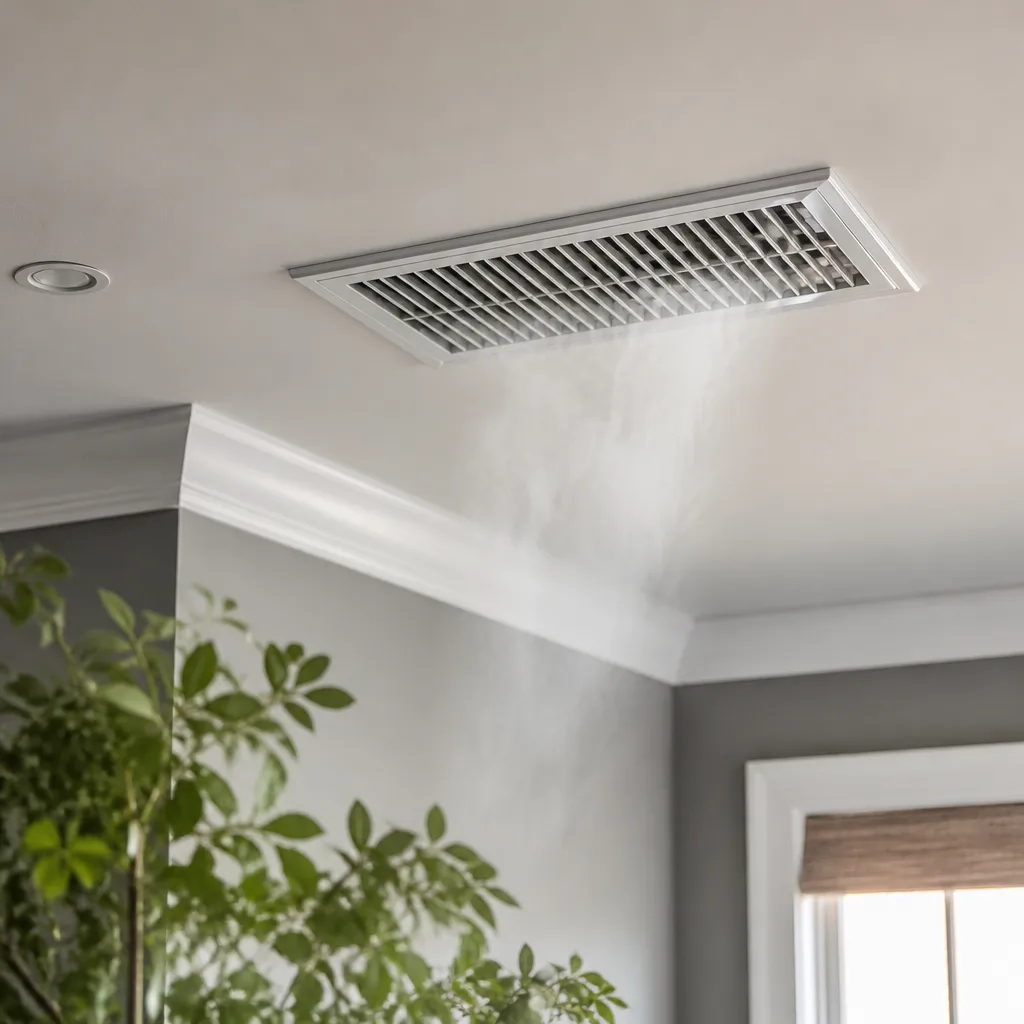 Sanitizing & deodorizing
Whole-system duct and dryer vent check with before-and-after photos - you see exactly what came out of your vents
That "$99 whole-house special" is a bait ad - the real number appears once they are in your hallway, or the "clean" is a shop-vac at the register. We photograph the inside of your ducts before and after instead.
The Complete Guide to Air Duct Cleaning in Oak Cliff
Most Oak Cliff homeowners assume their ducts are either clean or dirty, and that a truck with a big vacuum settles the question in an hour. The truth is messier. Your duct system is a chain of dissimilar parts – return grilles, flex runs, sheet metal trunks, duct board plenums, supply boots, the air handler itself – and cleaning only some of them means the parts you skipped keep feeding the parts you cleaned. The air handler coil, in particular, keeps a wet film of dust that recontaminates everything downstream within weeks. This guide maps every component that touches the air you breathe, explains what a real cleaning involves versus a surface pass, and shows you how to verify the work after the technician drives away. Oak Cliff has its own quirks, and we’ll get to those.
Quick Answer
Air duct cleaning in Oak Cliff is a full-pathway process: it includes the return grilles, the trunk and branch ducts, the supply boots, the air handler coil and blower compartment, and the registers, all cleaned under negative pressure with rotary contact agitation rather than a straight vacuum pass. In Dallas-area homes, most duct runs are flex duct with a sheet metal trunk and a duct board plenum, and each material needs a different cleaning approach. A proper job takes several hours, not a 45-minute visit, and the price is set per system by a written estimate rather than by vent count.
Styles & brands we work with
- Whole-home duct cleaning
- Dryer vent cleaning
- Camera inspection
- Sanitizing & deodorizing
Table of Contents
- Why Oak Cliff Homes Collect Duct Debris Faster Than You’d Think
- The Anatomy of an Oak Cliff Duct System
- What NADCA’s ACR Standard Actually Requires
- Why the Air Handler Coil and Blower Compartment Must Be Included
- What a Complete Cleaning Looks Like, Step by Step
- Red Flags in the Oak Cliff Duct Cleaning Market
- How to Verify the Cleaning Was Done Correctly
- Related Services That Protect the Same Air Pathway
Why Oak Cliff Homes Collect Duct Debris Faster Than You’d Think
The EPA doesn’t recommend routine duct cleaning on a fixed schedule. That surprises people. What the agency does say is that cleaning is appropriate when specific conditions exist: visible mold inside the ductwork, vermin infestation, ducts clogged with debris, or a system that’s been contaminated by smoke or water. The interesting part for Oak Cliff is how many of those conditions stack up here at once.
Start with the soil. Oak Cliff sits on the Austin Chalk and the black clay that runs through much of Dallas. That clay expands and contracts with moisture, and over decades it shifts foundations. When a slab moves, ducts crush, joints pull apart, and the system starts drawing air from a crawl space, an attic, or a wall cavity rather than from the return grille. That pathway brings dirt, insulation fibers, and pest debris into the system continuously, and no amount of vacuuming fixes it until the leak is sealed.
Then there’s the humidity. Dallas swings hard between wet springs and dry summers, and the attic where most Oak Cliff ductwork runs gets brutally hot. Flex duct that’s been baked for decades gets brittle, its inner liner delaminates, and the wire helix starts to show. A deteriorating liner sheds fibers into the airstream every time the blower runs.
Finally, the housing stock. Oak Cliff has one of the widest age ranges in the city – 1920s bungalows in Winnetka Heights, 1950s ranches in Kessler Park, 1960s and 70s brick homes through the middle of the neighborhood, and newer construction toward the southern edges. Each era came with a different duct philosophy, and each one fails in its own way. We’ll get into material differences next, because they change how a cleaning has to be done.
The takeaway is that Oak Cliff homes rarely have one duct problem. They have two or three at once, and a cleaning that ignores the leak or the failing liner leaves the root cause untouched. That’s why we treat duct repair and sealing as a separate service line rather than an upsell. If a full-system air duct cleaning is going to hold, the system has to be sealed first or the same debris returns.
The Anatomy of an Oak Cliff Duct System
You can’t judge a cleaning quote without knowing what’s actually in your attic. Dallas-area duct systems generally fall into three material categories, and Oak Cliff housing eras map onto them fairly predictably.
Flex duct (most common in homes built after 1970)
Flex duct is the insulated, corrugated plastic tube you see snaking across attic joists, usually with a wire coil inside. It’s cheap, fast to install, and it’s what most of Oak Cliff’s mid-century and later homes use for their branch runs. It’s also the hardest material to clean well. The ridges trap debris, and aggressive brushing can tear the inner liner. A rotary contact tool has to be run at low speed with the right head, and any run that’s torn, crushed, or sagging more than it should needs replacement rather than cleaning.
Sheet metal duct (common in older homes and in trunks)
Galvanized sheet metal shows up in the main trunk of most systems and in the full ductwork of some pre-1960 homes. It’s the most forgiving material – it can take real contact cleaning, it holds its shape, and it can be sealed at the seams with mastic. It’s also where you find the most joint leakage. Every seam is a potential leak, and a long trunk run with loose joints can lose a meaningful share of its air before it reaches a register.
Duct board (common in plenums and in some 1980s construction)
Duct board is rigid fiberglass with a foil face, and it’s what most Oak Cliff systems use for the plenum at the air handler and for return chases. It’s fragile. If it’s been wet, the fiberglass holds moisture and becomes a mold substrate, and there’s no cleaning it back to safe – it has to be removed and rebuilt. Any contractor who tells you they’ll “sanitize” a water-damaged duct board plenum is selling you a spray, not a fix.
What this means for a quote
When you get an estimate, ask what materials the technician expects to find and how each will be handled. A quote that doesn’t mention material differences is a quote from someone who hasn’t looked. In our experience, the material question is the single fastest way to separate a real duct contractor from a van with a vacuum.
What NADCA’s ACR Standard Actually Requires
The National Air Duct Cleaners Association publishes a standard called ACR – Assessment, Cleaning, and Restoration of HVAC Systems. It’s the reference document the trade measures itself against, and most discount operators have never read it. Here’s what it actually requires, in plain terms.
Assessment comes first
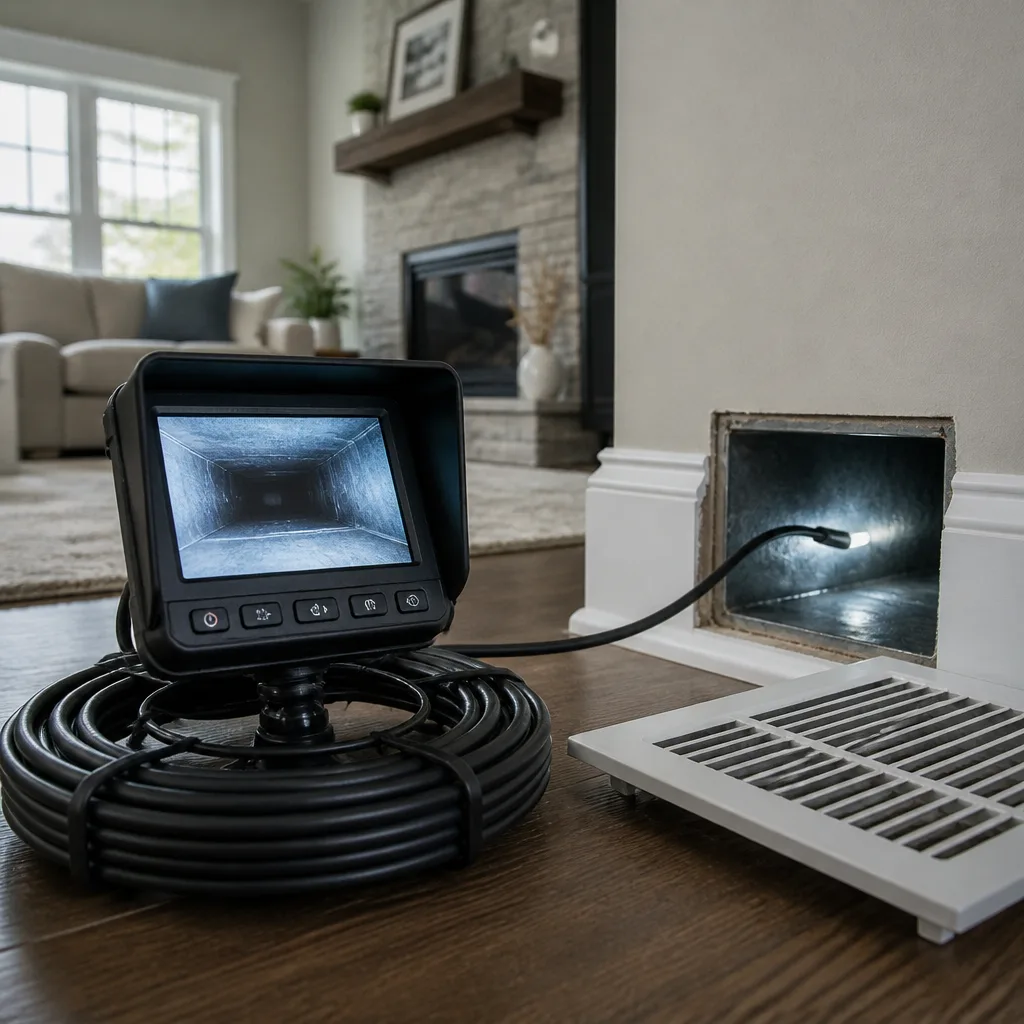
Before any cleaning starts, the contractor is supposed to assess the system. That means looking inside the ducts with a camera or by opening access points, checking the air handler, and documenting what’s there. It’s how you find out whether the job is a cleaning, a repair, or a replacement. Any operator who starts vacuuming without assessing is skipping step one.
Negative pressure is required, not optional
The system has to be put under negative pressure during cleaning so that dislodged debris is captured rather than pushed into the living space. This is where equipment matters. We use Abatement Technologies negative-air tools to hold containment throughout the job, and Nikro HEPA-rated vacuums to capture what comes out. A shop vac taped to a register is not negative pressure – it’s a hope.
Contact cleaning, not just airflow
The ACR standard calls for physical agitation of duct surfaces. Vacuum alone pulls loose dust; it doesn’t remove the adhered film that lines duct walls. Rotary contact cleaning is what breaks that film loose. We run the Rotobrush system on every duct job for exactly this reason – it scrubs the walls as it extracts, rather than relying on airflow to do the work.
The air handler is part of the system
The standard treats the air handler, coil, and blower compartment as part of the cleaned system. We’ll cover why in the next section, because this is the point most cheap cleanings fail on.
Verification and documentation
The job isn’t done until it’s been verified. That means a post-cleaning inspection, before-and-after documentation, and a report of what was found. If a contractor can’t show you what they removed, you have no way to know the cleaning was real.
If you want to see how this plays out in practice on a full HVAC scope, our page on HVAC cleaning walks through the coil and blower side in more detail.
Why the Air Handler Coil and Blower Compartment Must Be Included
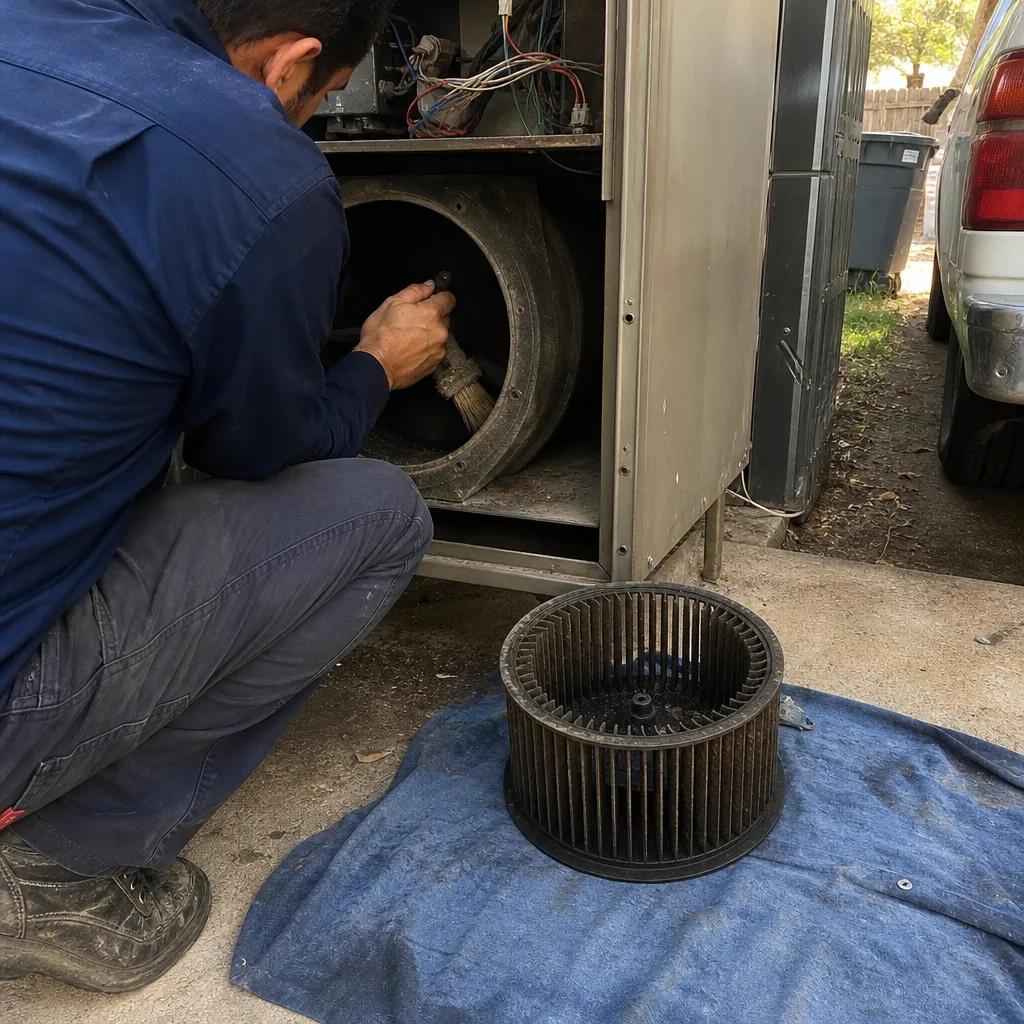
Here’s the failure mode that undoes most duct cleanings: the ducts get cleaned, the air handler gets skipped, and within a month the system is dirty again. The mechanics are simple. The evaporator coil sits wet for much of the cooling season. Dust that reaches it sticks and stays, and the blower wheel builds a mat of debris on its blades. Every time the system runs, that wet coil and that caked blower shed material into the airstream, straight into the ducts you just paid to have cleaned.
In Oak Cliff, this matters more than in a dry climate because the cooling season is long and the coil stays wet for months. A coil that’s never been cleaned can carry a film thick enough to reduce airflow measurably, and reduced airflow means the system runs longer, the house stays uneven, and the energy bill climbs.
What a proper air handler cleaning includes:
- The evaporator coil, cleaned in place with the correct coil cleaner and rinsed without flooding the pan
- The blower wheel and housing, pulled and cleaned rather than wiped in place
- The condensate pan and drain line, cleared and checked for standing water
- The blower compartment itself, vacuumed and wiped down
- The filter rack and return plenum, checked for bypass that lets air slip past the filter
If you have an Aprilaire or Honeywell filtration or humidification accessory tied into the system, that’s the moment to have it inspected too – those components sit in the same air pathway and need to be part of the service, not an afterthought.
We think of the air handler as the source and the ducts as the delivery. Clean the delivery and leave the source dirty, and you’ve wasted the money. It’s that simple.
What a Complete Cleaning Looks Like, Step by Step
This is the sequence a real full-system cleaning follows. Not every job needs every step at the same depth, but any step skipped entirely is a gap in the result.
- Assessment and documentation. The technician inspects the system, opens access points, and photographs conditions before any cleaning begins. Findings are shared with you – including anything that looks like it needs repair rather than cleaning.
- Containment setup. The system is put under negative pressure with Abatement Technologies equipment, and registers and grilles are sealed so that disturbed debris has nowhere to go but into the HEPA vacuum.
- Return and supply grille cleaning. Grilles come off and get cleaned individually. This is the part most visible to you, and it’s the part a discount crew usually does thoroughly while skipping everything behind it.
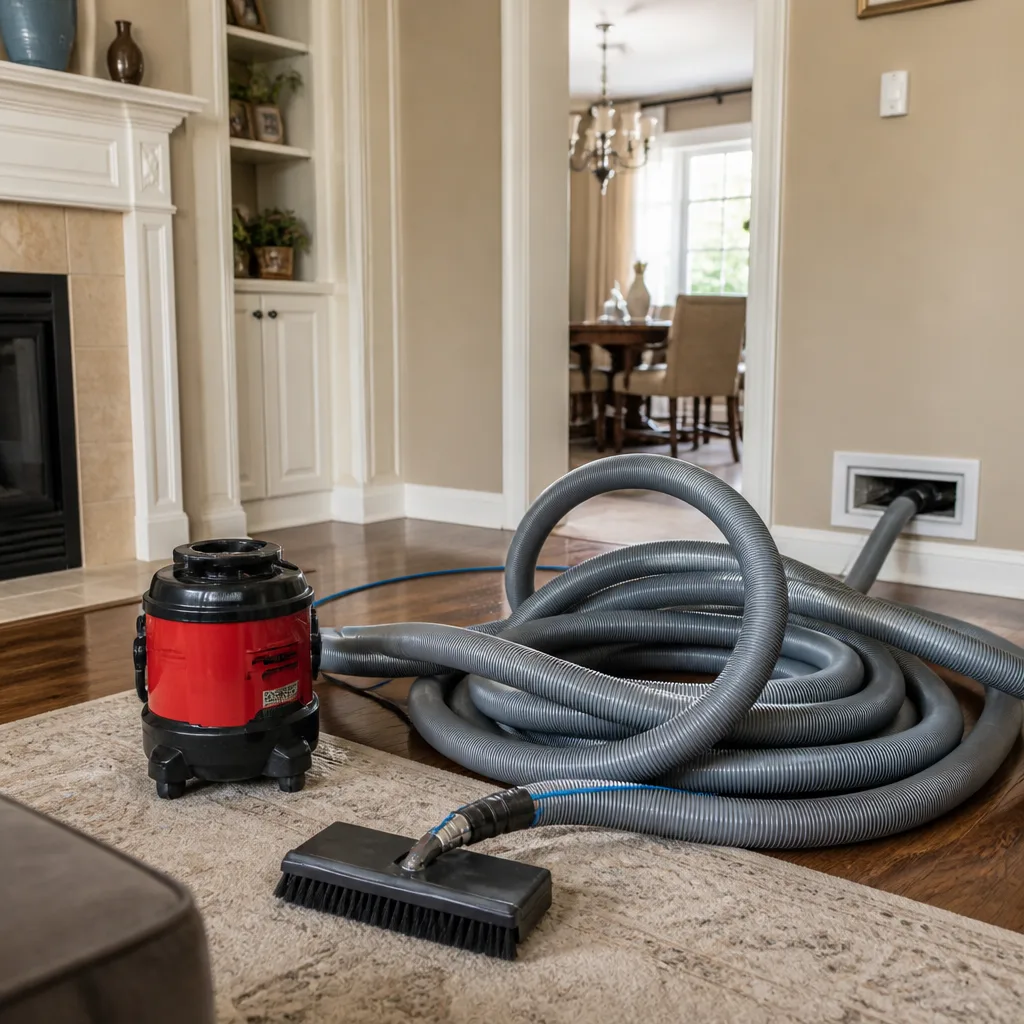
- Rotary contact cleaning of the trunk and branch runs. The Rotobrush system is fed through each run, agitating the duct walls and extracting debris at the same time. Flex runs get low-speed heads; sheet metal gets more aggressive ones.
- Supply boot and register cleaning. The boots – the transition boxes behind each register – collect debris and are often skipped. They’re cleaned and inspected for gaps around the drywall.
- Air handler service. Coil, blower, pan, and compartment cleaned as described in the previous section.
- Sealing and repair. Loose joints, disconnected runs, and crushed flex sections are sealed or replaced. This is where the job holds or fails.
- Sanitizing (when appropriate). A sanitizer is applied only when the assessment found microbial growth or odor. It’s not a substitute for cleaning, and it shouldn’t be applied to a wet or dirty surface.
- Verification. The technician reinspects, photographs the results, and confirms airflow at the registers before packing up.
The whole sequence in an average Oak Cliff home takes several hours. If someone offers to do it in one, ask exactly which steps they’re dropping.
Red Flags in the Oak Cliff Duct Cleaning Market
The duct cleaning trade has a reputation problem for a reason. Here’s what to watch for when you’re comparing quotes in Oak Cliff.
Franchise vans that sub out the work
A lot of the vans you see around Oak Cliff with national branding are franchise operations that sell the job and then hand it to a subcontractor who owns the equipment. The person who quoted you is not the person in your attic. Ask directly: who does the work, and do they own the equipment or rent it? If the answer is fuzzy, that’s your answer.
Per-vent pricing
Quoting by the vent is a way to make the number look small on the phone. It also makes no sense technically: two homes with the same vent count can have wildly different system layouts, materials, and levels of contamination. We price per system, agreed before work starts, with a written estimate that sets the final price.
The coupon that becomes a much larger invoice
The classic move is a teaser price that turns into a much bigger bill once the technician is on site and “discovers” problems. A written estimate agreed before work begins prevents this. If the assessment turns up something that needs fixing, you should hear about it as a separate quote you can accept or decline, not as a surprise on the invoice.
No containment
If the crew doesn’t set up negative pressure, debris from the cleaning goes into your living space. Ask what equipment they use for containment. A shop vac doesn’t count.
No access points, no camera, no photos
A contractor who won’t open the system and show you what’s inside has no way to prove they cleaned it. Before-and-after photos of your own ducts cost nothing and should be standard.
Skipping the air handler
If the quote is duct-only with no mention of the coil or blower, the cleaning won’t hold. This is the single most common shortcut we see in Oak Cliff.
How to Verify the Cleaning Was Done Correctly
You don’t need to be in the attic to check the work. A few simple observations after the technician leaves will tell you whether the job was real.
- Ask for the before-and-after photos. Every cleaning should produce photo documentation of the ducts, the air handler, and the registers. If they weren’t taken, the work can’t be verified. Ask before the crew starts.
- Put your hand at a supply register. Airflow should feel stronger and more even than before. Weak flow at one register often means a disconnected or crushed run that wasn’t addressed.
- Sniff near the returns. A musty smell that was there before the cleaning should be gone or noticeably reduced within a few days. If it’s still there after a week, ask what the assessment found.
- Look at the registers and grilles. They should be visibly clean – no dust film, no debris in the fins.
- Check the filter. A fresh filter should have been installed or your existing one reinstalled cleanly. A filter that’s already gray within days suggests the coil or blower wasn’t cleaned.
- Watch your energy bill for a month. A system that was genuinely restricted by debris will run less after cleaning. The change won’t be dramatic, but you should see it.
- Look for debris in the pan or on the floor near the air handler. A clean job leaves a clean mechanical closet.
The single best verification is the before-and-after photo set of your own ducts. If a company won’t provide it, look elsewhere.
Related Services That Protect the Same Air Pathway
A duct cleaning is one piece of indoor air quality. The full scope covers every component that touches the conditioned air in your Oak Cliff home, and skipping some of them means the others don’t hold.
Dryer vent cleaning
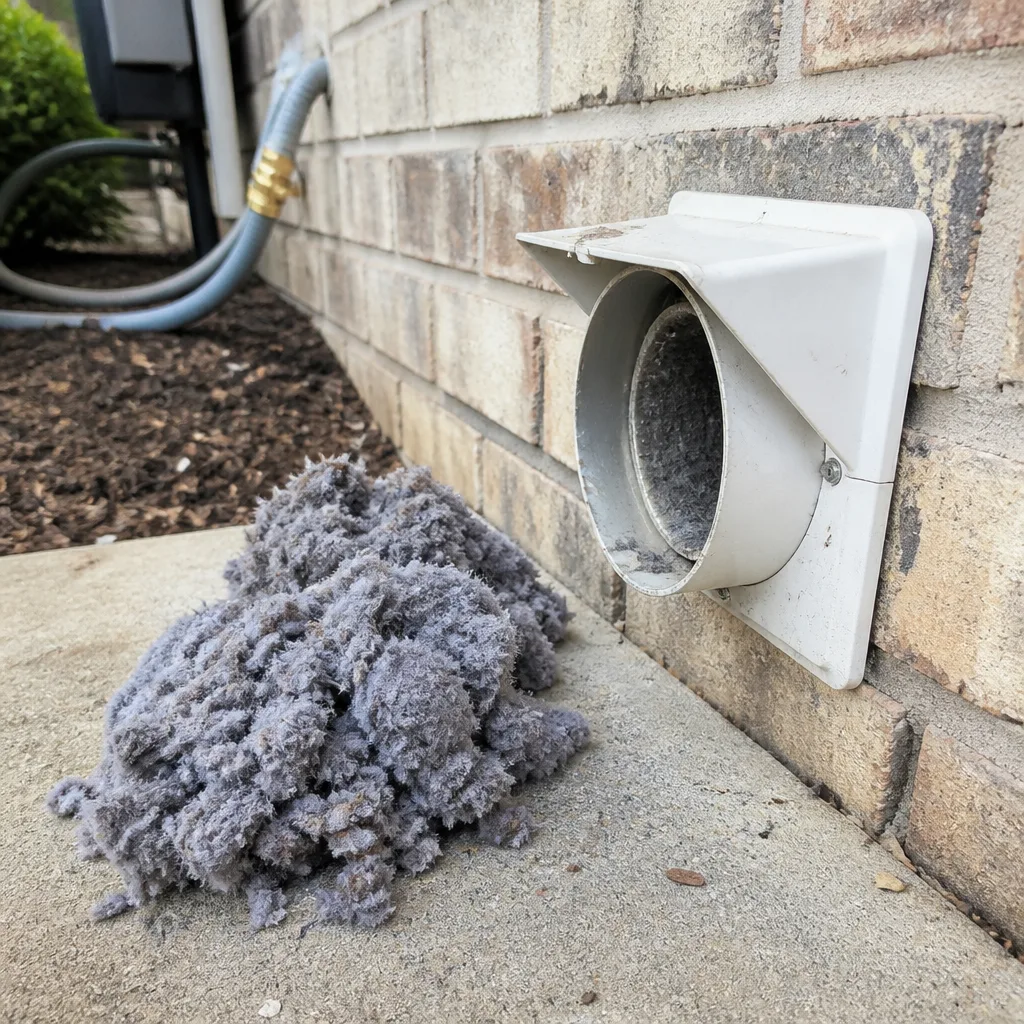
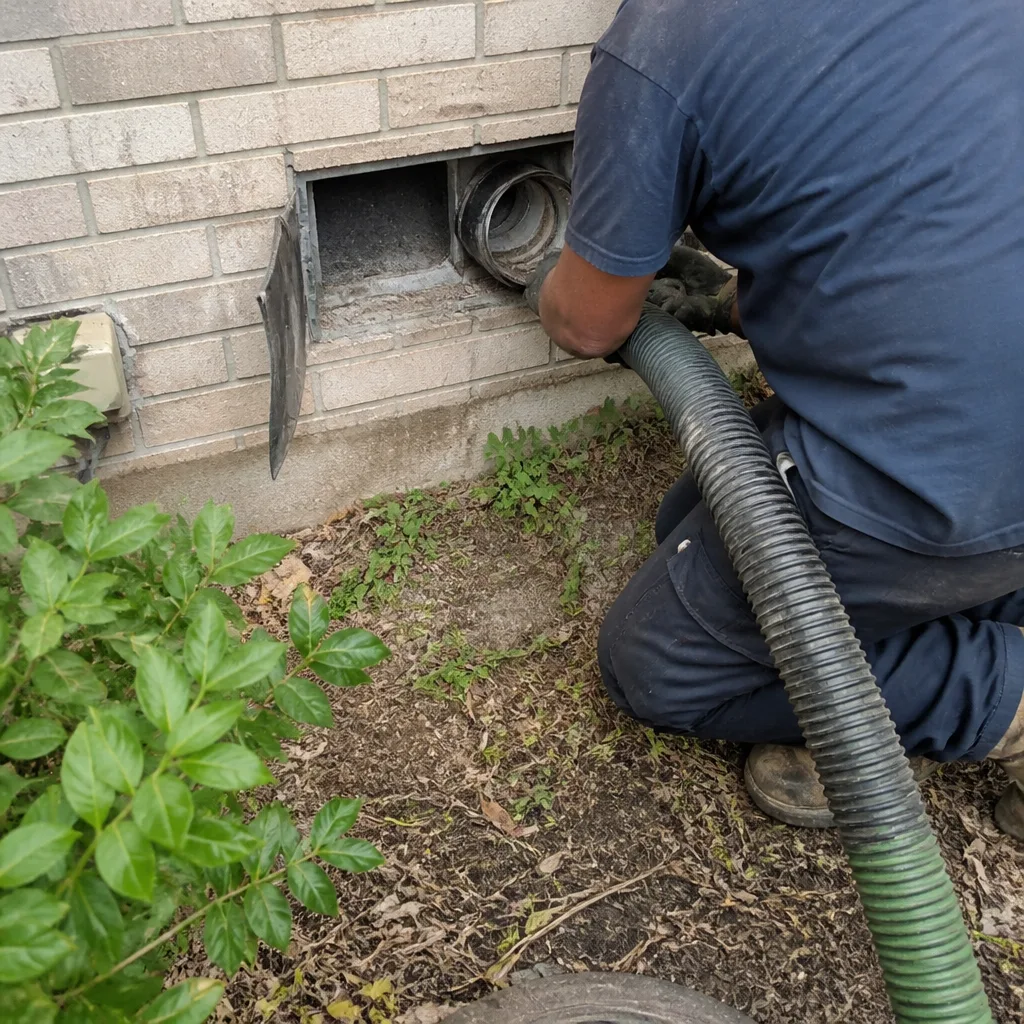
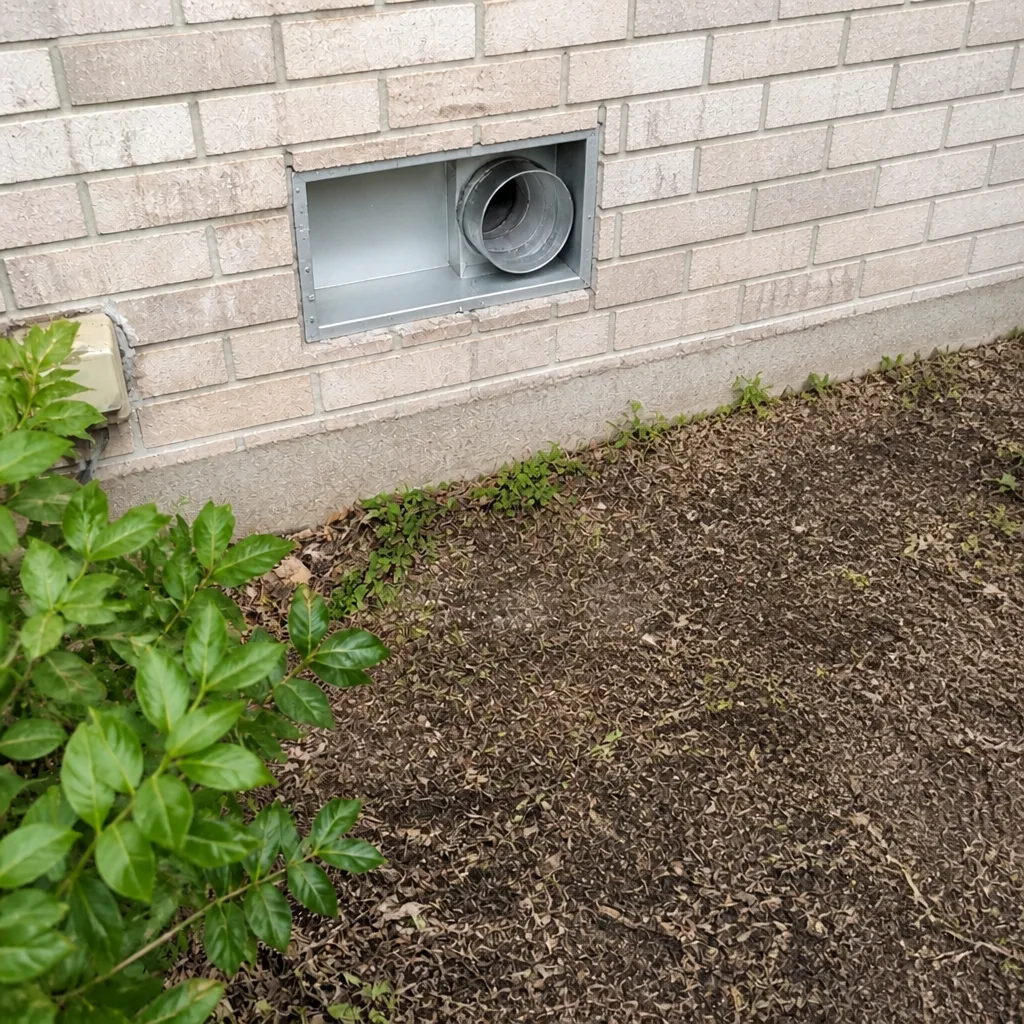
Dryer vents are a fire risk, and they’re a service most duct-only companies don’t offer. Lint accumulates in the vent run and restricts airflow, which makes the dryer run hotter and longer. It’s a separate system from your HVAC, but it’s the same house and the same safety category. If the ducts are due, the dryer vent usually is too. We handle both under one visit – see dryer vent cleaning for the details on how the vent run is cleaned and inspected.
Duct repair and sealing
Leaks in duct runs are the root cause of most dirt infiltration. A duct system with pulled joints and crushed runs will re-dirty itself within weeks of cleaning. Repair and sealing closes those pathways so the cleaning holds. This is the service line most discount operators don’t offer, and it’s the one that determines whether your cleaning lasts a year or a week.
Air quality and sanitizing
Sanitizing is a targeted step, not a routine one. It’s appropriate when the assessment found microbial growth or persistent odor. We use it as a complement to cleaning, never as a substitute. If you have an Aprilaire or Honeywell filtration or humidification system, those components can be integrated and serviced as part of the same visit.
HVAC cleaning
The air handler, coil, and blower system sit at the center of the air pathway. A proper HVAC cleaning service handles those components, and it’s what keeps the ducts from recontaminating. Our contractors include this in the full-scope service so you’re not chasing the same debris twice.
Common Mistakes to Avoid
- Cleaning the ducts but skipping the coil. The wet evaporator coil and caked blower wheel are the source of most recontamination. A duct-only job is a partial job, and in Oak Cliff’s long cooling season it shows up fast.
- Hiring on price alone. A quote that’s half the others isn’t a bargain – it’s a shorter job with fewer steps. Ask what equipment and containment it includes before you compare numbers.
- Accepting per-vent pricing. Two Oak Cliff homes with the same vent count can have very different duct systems and different contamination loads. Per-system pricing is the only honest way to quote.
- Ignoring duct leaks and crushed runs. If the return is drawing from a crawl space or an attic, cleaning just gives you a cleaner path for the same dirt. Sealing has to be part of the work.
- Letting anyone spray sanitizer on a dirty duct. Sanitizer applied to a contaminated surface is wasted money – the debris stays and the spray sits on top of it. Cleaning first, sanitizing only when the assessment calls for it.
- Not asking for photo documentation. If you can’t see before-and-after photos of your own system, you can’t verify the work. Ask before the crew starts.
- Skipping the dryer vent. In a home where ducts are due, the dryer vent is usually overdue. It’s a fire risk, and most duct-only companies don’t offer the service.
See the difference
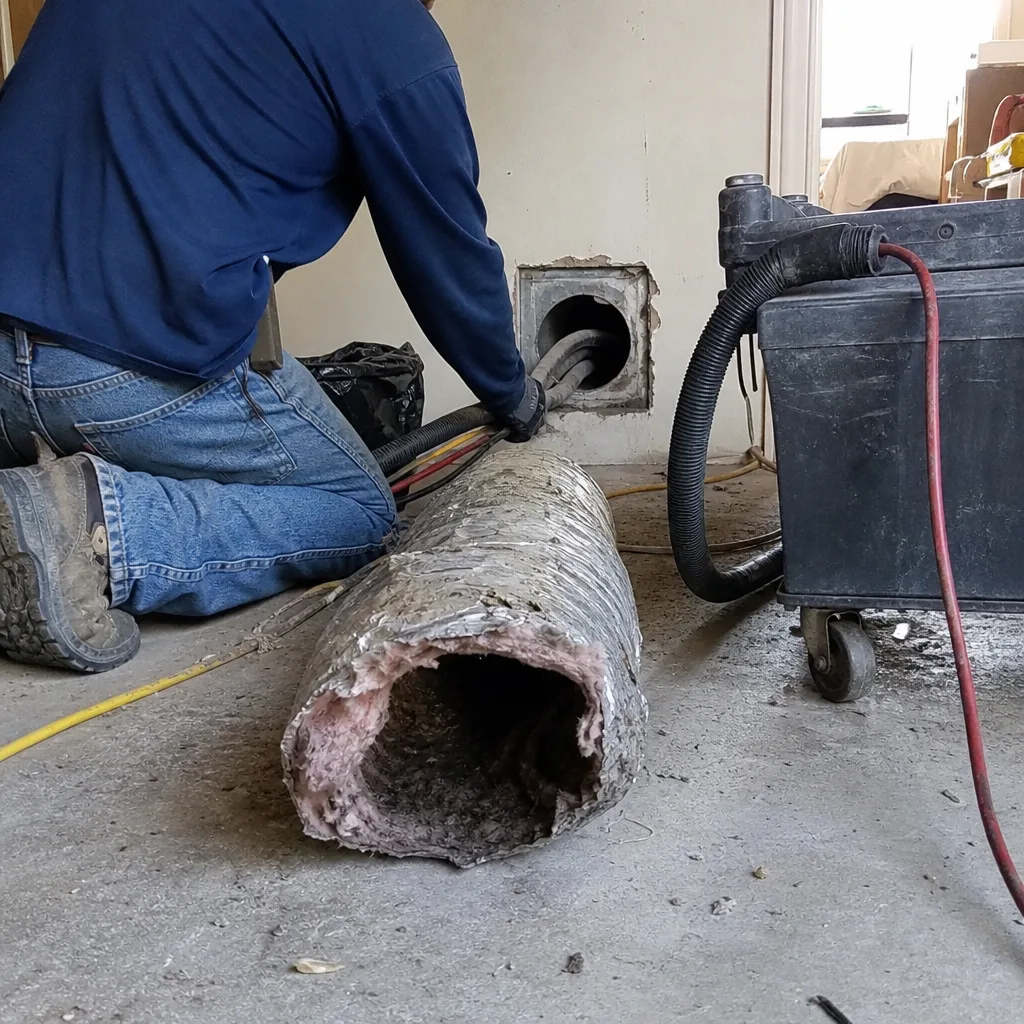 Before
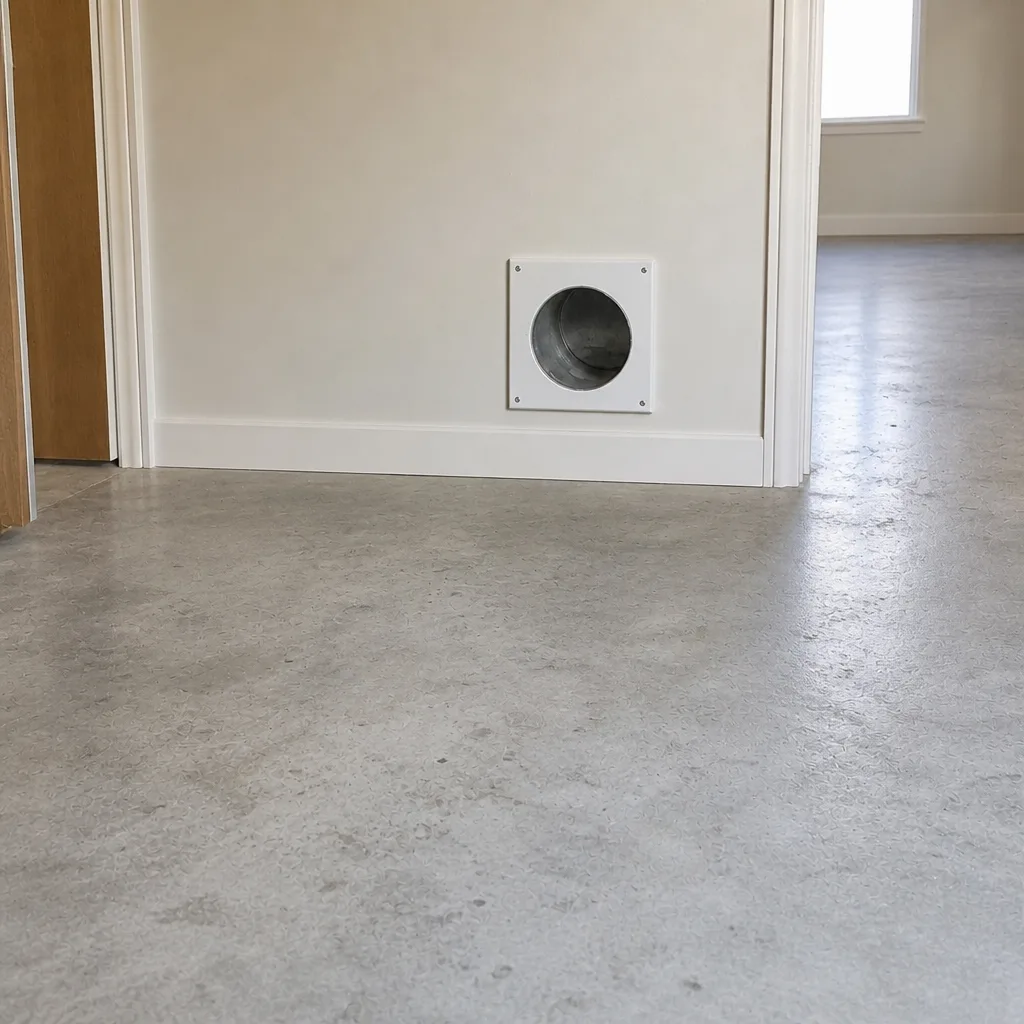 After
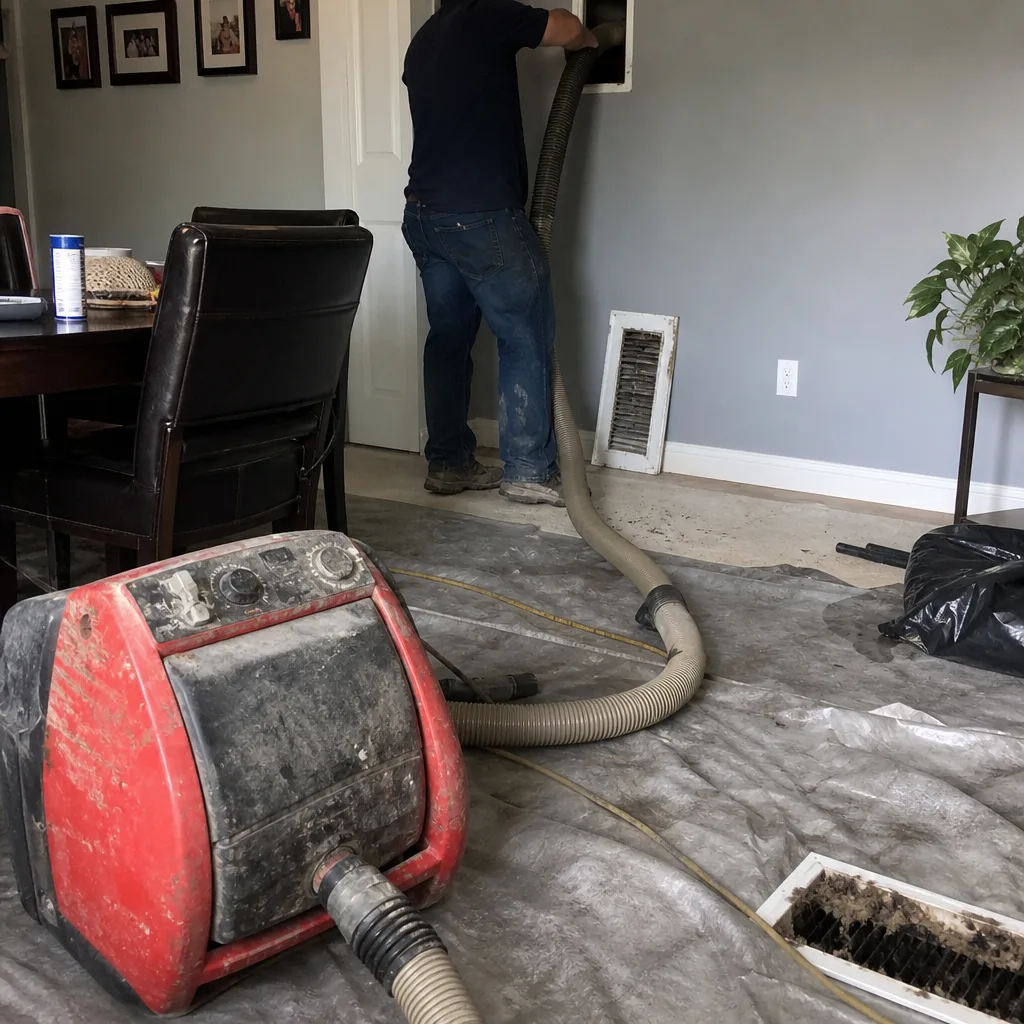 Before
 After
 Before
 After
When to Call a Professional
If you’ve noticed worsening allergies in the house, a musty smell when the system kicks on, uneven room temperatures, or a bill that’s climbed over the past few seasons, it’s worth having the system assessed. Visible mold inside the ducts, pest activity, or debris accumulating at the registers are clear signs to call. Water damage to a duct board plenum needs immediate attention, because fiberglass that’s been wet can’t be cleaned back to safe. A collapsed or disconnected flex run in the attic is another reason to get someone out – you can’t see it from the living room, but it shows up as a weak register and a climbing bill. Air Duct Cleaning Oak Cliff offers free estimates in Oak Cliff – call (855) 337-2058. We answer 24/7. Fast dispatch from 7am to 7pm, Sunday through Friday.
Frequently Asked Questions
Air duct cleaning is priced per system by a written estimate, not per vent, because the scope varies with duct material, system size, and whether repair or sealing is needed. The final price is set by the estimate before work starts. Call (855) 337-2058 for an exact quote – estimates are free. We answer 24/7. Fast dispatch from 7am to 7pm, Sunday through Friday.
Cheap quotes are cheap because they skip steps – usually the air handler, containment, and repair. The gap between a discount quote and a full-system quote is the cost of the work that wasn’t included. Ask what equipment and containment the quote covers, and confirm the air handler is in scope. Call (855) 337-2058 to talk through what a full-system quote for your Oak Cliff home includes.
You should see before-and-after photos of your own ducts, the air handler, and the registers, plus a post-cleaning inspection and a written report of what was found. Ask for photo documentation before the crew starts. Call (855) 337-2058 for an estimate and to see how we document the work.
The EPA doesn’t recommend a fixed schedule – cleaning is appropriate when conditions call for it, not on a timer. Visible mold, pest activity, heavy debris in the ducts, or smoke and water damage are the usual triggers. Oak Cliff’s clay soil movement and long cooling season shorten the window, so a check every few years makes sense. Call (855) 337-2058 to have the system assessed.
Yes – the air handler coil, blower, pan, and compartment are part of the full-system scope. Cleaning the ducts without them lets the coil recontaminate everything downstream. Call (855) 337-2058 to schedule an estimate that covers the full pathway.
Yes, if the dryer vent is due – it’s a separate system, but it’s a fire risk and most duct-only companies don’t offer it. Getting both handled under one visit saves you a second appointment. Call (855) 337-2058 for a combined estimate on duct and dryer vent work.
The Bottom Line
A real duct cleaning in Oak Cliff covers the whole air pathway: return and supply grilles, trunk and branch runs, supply boots, the air handler coil and blower, and the register faces, all cleaned under negative pressure with rotary contact agitation. The materials matter – flex, sheet metal, and duct board each need different handling – and the air handler has to be in scope or the cleaning won’t hold. Leaks and crushed runs need to be sealed as part of the work, not afterwards. Verify the job with photo documentation and a few simple checks after the technician leaves. For a full-system estimate, see our main Air Duct Cleaning Oak Cliff page.
Ready for a full-system cleaning? Call Air Duct Cleaning Oak Cliff at (855) 337-2058 for a free estimate. We answer 24/7. Fast dispatch from 7am to 7pm, Sunday through Friday. Our technicians have up to 9 years of experience, use professional-grade equipment on every job, and price per system with a written estimate agreed before work starts.
Written by the team at Air Duct Cleaning Oak Cliff.