
Last updated November 23, 2026
 Whole-home duct cleaning
 Dryer vent cleaning
 Camera inspection
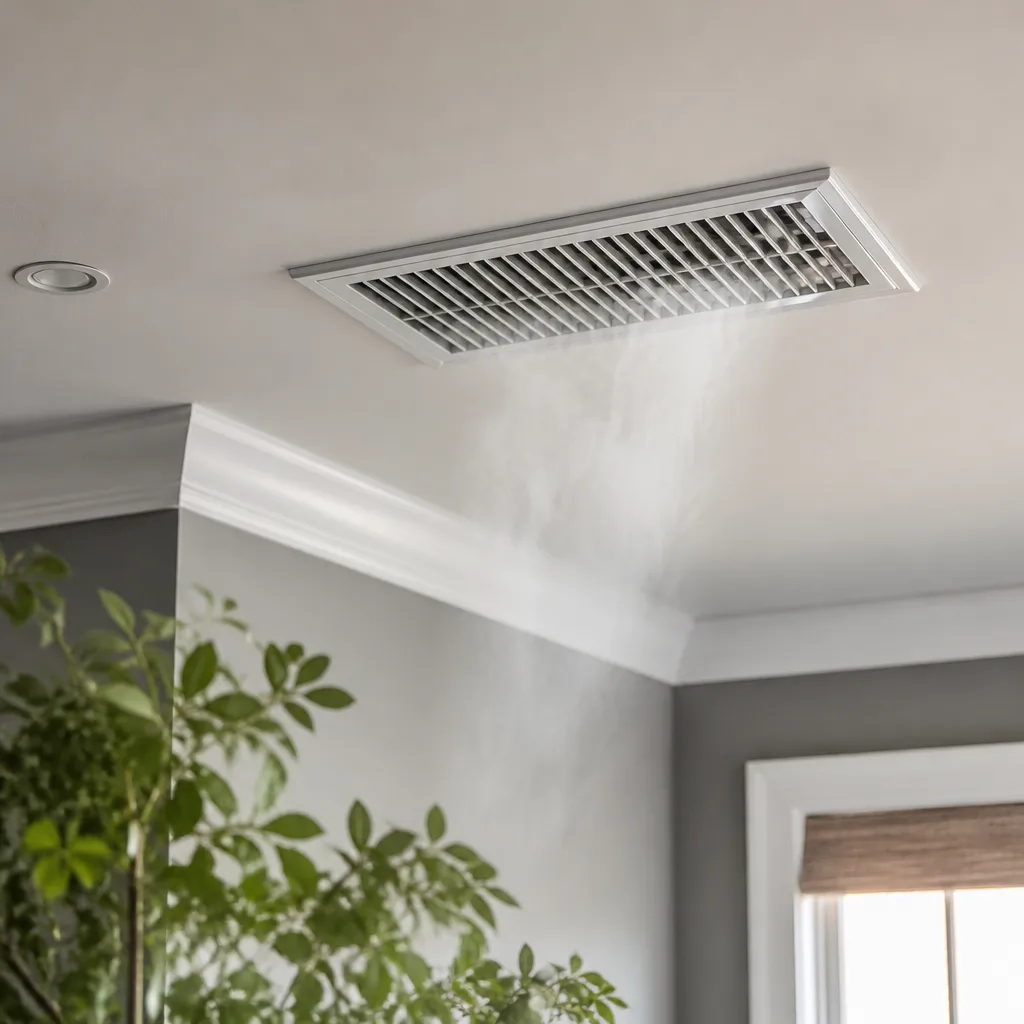 Sanitizing & deodorizing
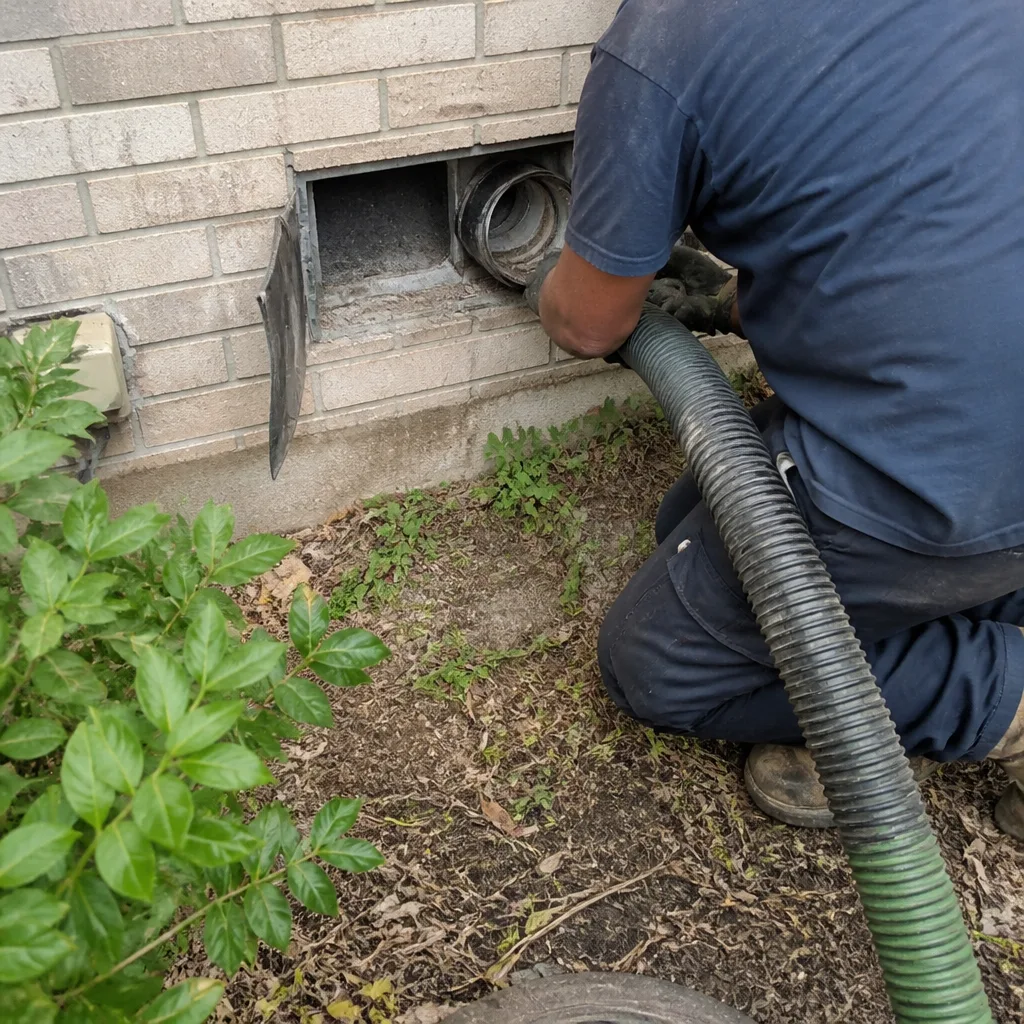
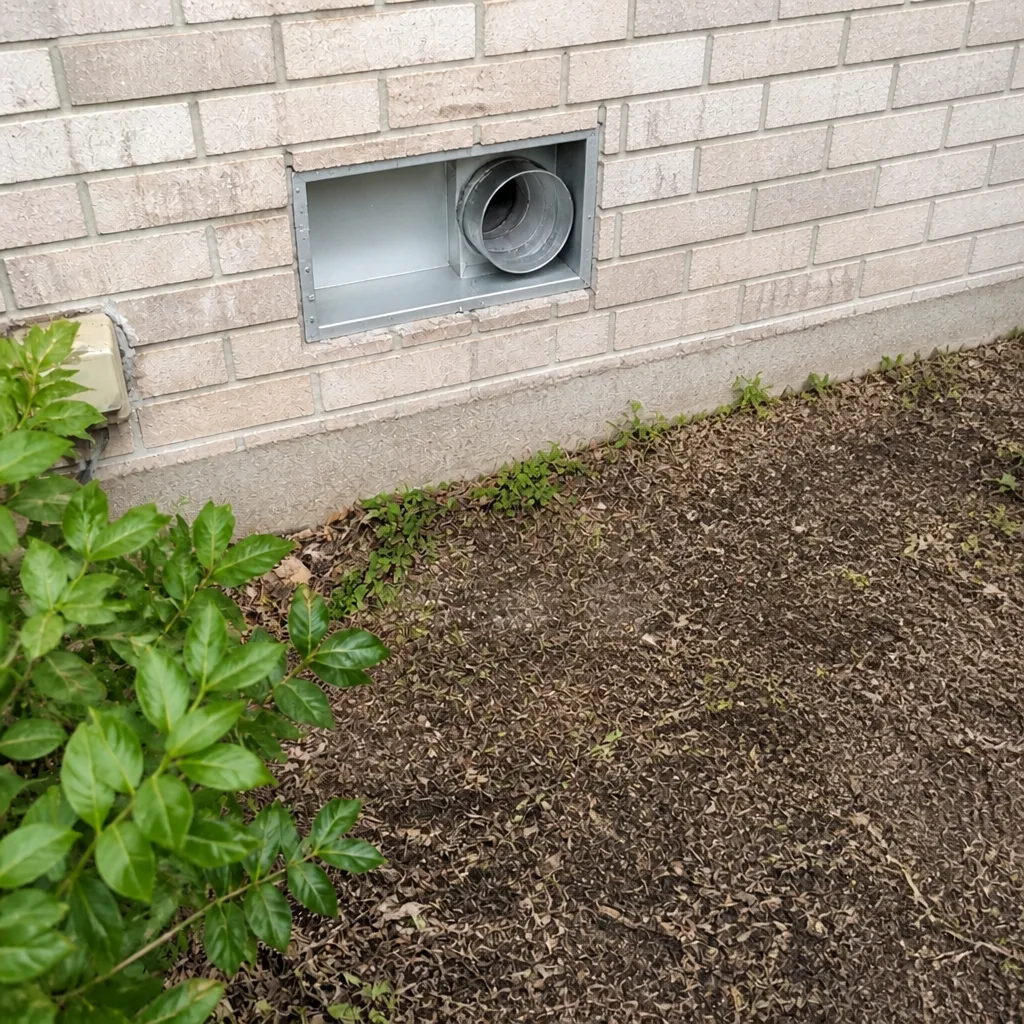
Whole-system duct and dryer vent check with before-and-after photos - you see exactly what came out of your vents
That "$99 whole-house special" is a bait ad - the real number appears once they are in your hallway, or the "clean" is a shop-vac at the register. We photograph the inside of your ducts before and after instead.
Air Duct Cleaning Maintenance Checklist for Oak Cliff Homeowners
If you can’t tell a technician when your ducts were last cleaned, what method was used, or whether a sanitizer was applied, you’re essentially starting from zero every time, and you’re paying for it. Most homeowners treat duct maintenance as a decision they make once and forget. The ones who get real results treat it as a log they keep. Oak Cliff homes deal with a long spring pollen season, heavy summer dust, and older housing stock where ductwork may have been added, patched, or rerouted more than once, which means the generic advice online was never calibrated to your house anyway. What follows is a homeowner-owned system: what to check monthly, how to prepare before a crew arrives, how to verify work was actually done, when to change filters here, and how to track performance between cleanings.
Quick Answer
A duct maintenance checklist for Oak Cliff homeowners should include a monthly grille-and-return walkthrough, a filter interval tuned to local pollen and dust (not the 90-day default on the box), a pre-service list of questions for the crew, and a post-service record that captures static pressure, access panel condition, and before-and-after photos. The checklist only earns its keep if you keep it: a written log of what was done, when, and what changed afterward. Change filters every 60 days through Oak Cliff’s spring pollen season and again during summer dust load, and call a professional when grilles show debris buildup, rooms heat unevenly, or odors return.
Styles & brands we work with
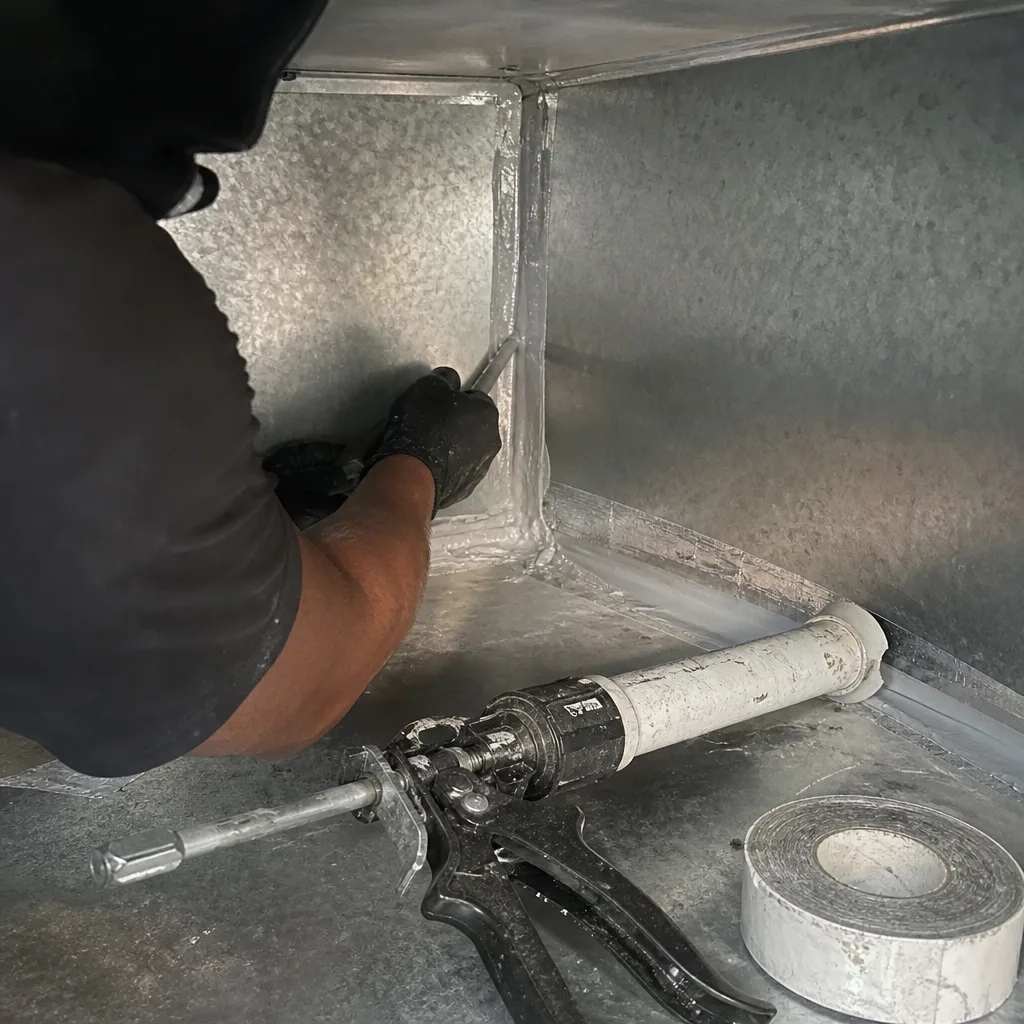
- Whole-home duct cleaning
- Dryer vent cleaning
- Camera inspection
- Sanitizing & deodorizing
Table of Contents
- The Monthly Walkthrough: What to Look At, Smell For, and Log
- Filter Change Intervals Calibrated to Oak Cliff
- Pre-Service Checklist: What to Have Ready and What to Ask
- Post-Service Verification: Static Pressure, Panels, and Paperwork
- Tracking Performance Between Cleanings
- The Dryer Vent Line on Your Checklist
- Why Duct Repair and Sealing Belongs on the List
- How Often Does It Really Need Doing?
The Monthly Walkthrough: What to Look At, Smell For, and Log
The monthly walkthrough is the piece most homeowners skip and the one that saves the most money. It takes about ten minutes. You’re not diagnosing anything; you’re collecting observations that make every future service call more useful and every decision less guesswork. In our experience, the calls that go smoothly are the ones where the homeowner can say “the return in the hallway started looking gray in April” instead of “something feels off.”
Walk your Oak Cliff home and check these things, in this order:
- Supply grilles: Hold a flashlight at the opening. Look for dust streaks along the vanes, dark staining at the edges, or fuzzy debris stuck to the louvers. Photograph anything you see.
- Return grilles: Returns collect far more than supplies because they pull air toward the filter. If the return face looks matte gray instead of clean, note the date.
- Smell test: Stand directly under a supply vent for 30 seconds and breathe normally. Musty, dusty, or faintly chemical odors are the signal to note in your log. Do the same at the return.
- Airflow feel: Hold a strip of tissue near each supply grille and note whether it flutters firmly or hangs. Compare rooms. Uneven flutter is often the first sign of a leaky duct or a clogged run.
- Condensate and cabinet: Look at the air handler cabinet for dust rings around seams and at the drain line for standing water. A dirty cabinet usually means dirty ducts upstream of it.
- Log it: Date, room, observation, photo. A notes app works. A clipboard works better.
The building stock in Oak Cliff varies a lot. Homes with original 1950s ductwork, homes with attic-routed flex duct added during a remodel, and newer builds all fail differently. The log catches all three because it’s about change over time, not a perfect snapshot. If a grille that was clean in March looks gray by June, you have a data point worth more than a generic “clean your ducts every few years” rule.
For a full explanation of what professional cleaning involves, see our air duct cleaning page.
Filter Change Intervals Calibrated to Oak Cliff
The “change every 90 days” printed on every filter box is a national average. It’s not wrong, it’s just not calibrated to a place with an intense spring pollen season, dry windy weeks that push dust, and summer cooling load that keeps the blower running for long stretches. Neither national average applies to a house in Oak Cliff as cleanly as an interval built around the local calendar.
Here’s a working schedule we recommend, based on what tends to actually match the local load:
- February through May: Every 60 days. This is the heavy pollen stretch. Filters load faster than the box suggests.
- June through September: Every 60 days. Cooling runs hard, the blower moves more air, and dust pulled into the return accumulates faster.
- October through January: Every 90 days, with a monthly flashlight check. Heating season runs the system again but at lower volume in most homes.
- After any renovation, drywall work, or major yard work: Replace immediately, regardless of where you are on the calendar. Construction dust overwhelms the filter fast.
- If you have pets, smokers, or anyone with allergies in the house: Cut every interval by a third. The filter is working harder than for a non-smoking, no-pet home.
Filter MERV rating matters as much as the interval. Higher isn’t automatically better: a MERV 13 filter in an older system can choke airflow and cause the blower to work harder than it should. If you’re considering a whole-home filtration upgrade, the filter cabinet is the place where Honeywell and Aprilaire components come into play, integrated properly with your air handler rather than taped into place. A system set up right lasts longer and filters better than a stack of cheap filters swapped on a guess.
Write the date on the filter edge with a marker. That’s the single most reliable tracking method there is, and it survives the filters you forget you replaced.
Pre-Service Checklist: What to Have Ready and What to Ask
Before any duct cleaning crew arrives at your Oak Cliff home, the difference between a good service call and a bad one is usually decided in the questions you ask beforehand. This is not about being a difficult customer. It’s about confirming the crew has the equipment and the scope to do the job your house actually needs.
What to have ready
- Your written filter log and any notes from the monthly walkthrough, photos included.
- A clear path to all supply and return grilles, so the crew can access every vent line without a scavenger hunt.
- The location of the air handler cabinet, and whether anyone has touched it since it was installed.
- A note of any rooms that heat or cool unevenly, and how long the problem has persisted.
- Any known dust-sensitive occupants (allergies, asthma), so the crew knows to be careful in those rooms.
What to ask before the crew arrives
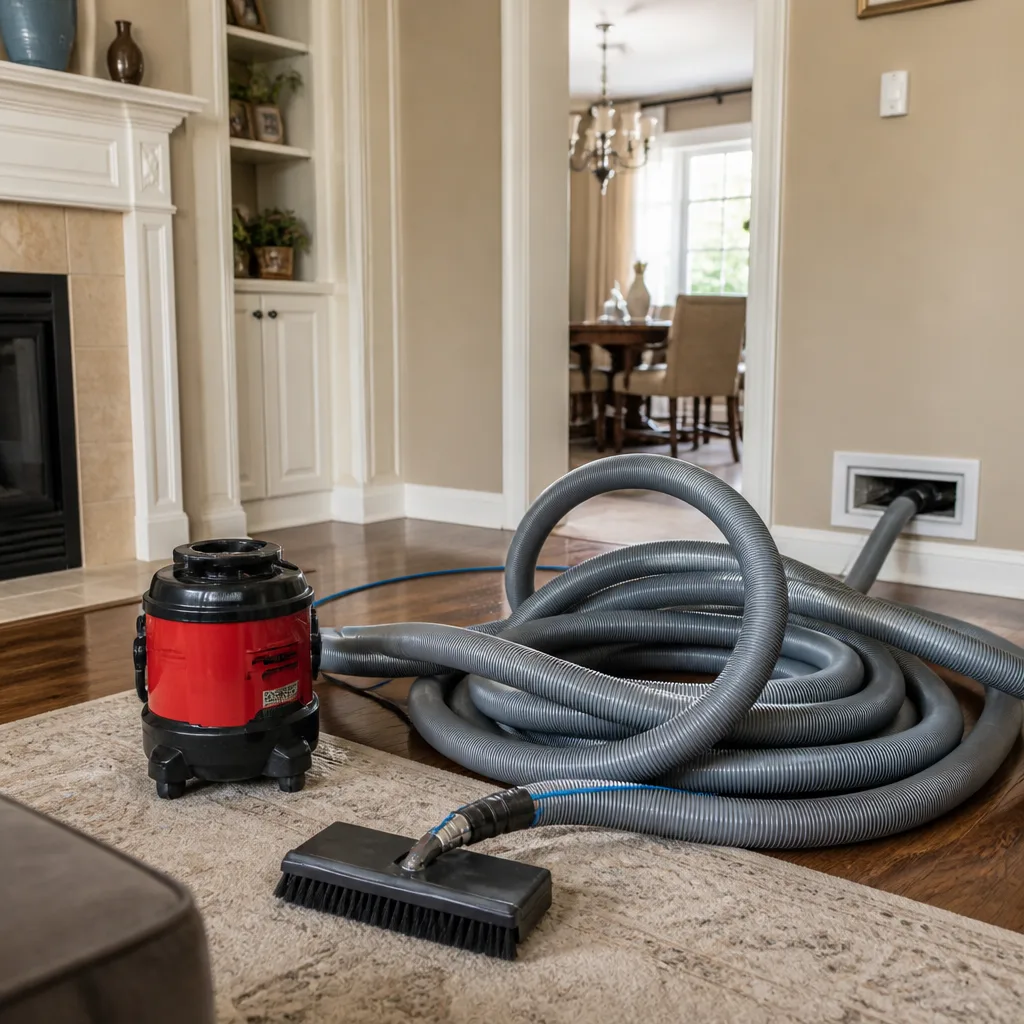
- “What equipment will you bring?” The answer should name real gear. Rotary contact-cleaning systems like Rotobrush physically scrub the duct walls; HEPA-rated vacuums like Nikro contain what’s dislodged; negative-air tools from Abatement Technologies keep dust out of the living space. If the answer is “a big vacuum,” that’s a different job than full-system cleaning.
- “How many access panels will you cut, and where?” Proper cleaning needs access points the original installer didn’t provide. Ask how many they expect and where.
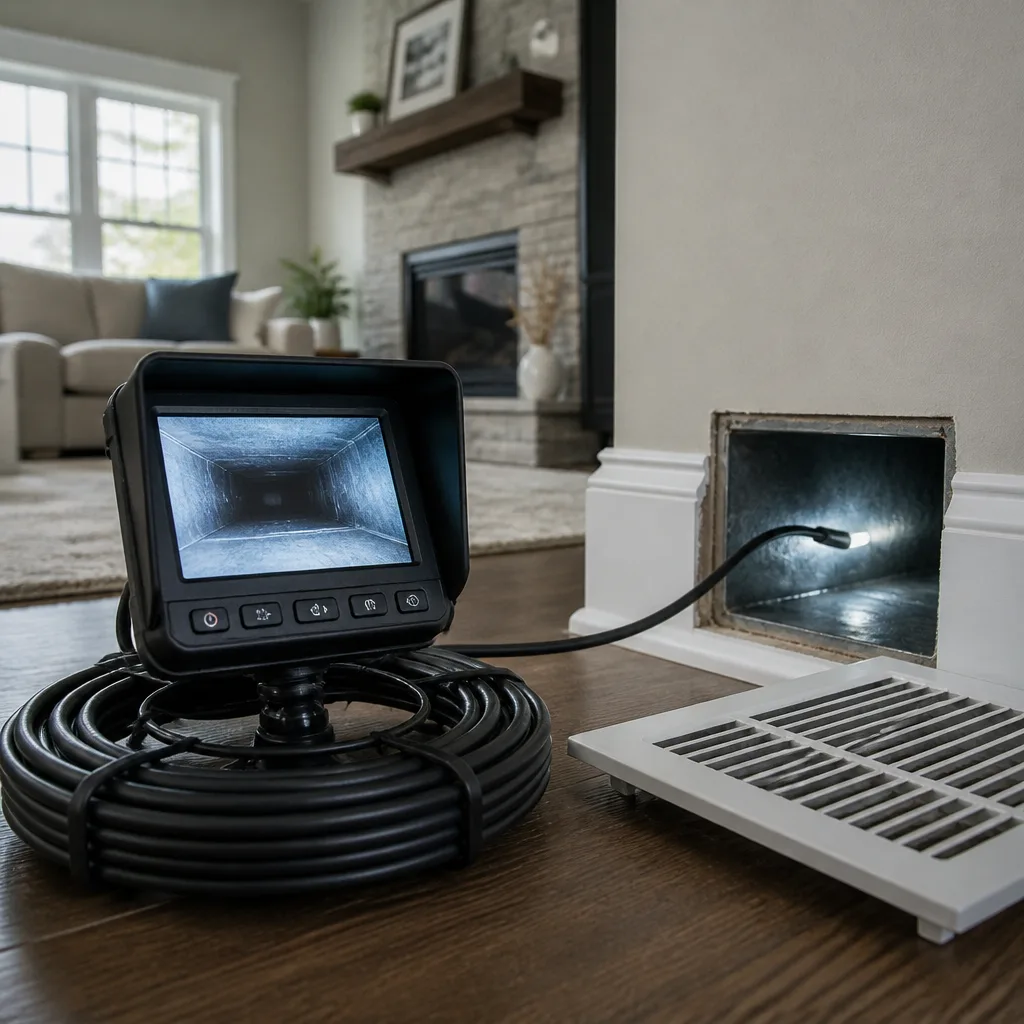
- “Will you inspect and photograph the ducts before and after?” You should see your own ducts, not stock photos.
- “Do you inspect the cabinet and coils, or just the ducts?” A full-system clean includes the HVAC cleaning side too: cabinet, blower, coil face.
- “Is sanitizer included, and what type?” Sanitizing is a separate step from cleaning, and it should be a choice you make knowingly.
- “Are you licensed and insured as the state requires?” Ask. Get it in writing if it matters to you, which it should.
Ask about containment, too. A well-run job uses negative pressure to keep dust moving out of the home, not back into it. Every professional job we connect people with is set up for containment from the start.
Post-Service Verification: Static Pressure, Panels, and Paperwork
A duct cleaning without a verification step is a duct cleaning you have to take on faith. The verification is simple, but if you skip it, you have no baseline for the next service call, and the next call starts from zero again.
Here’s what to check after the crew has left:
- Static pressure baseline: Ask the crew to record the system’s static pressure before and after cleaning. This is a technical measurement of how hard the system works to move air. A meaningful drop after cleaning suggests the airflow path was actually improved, not just wiped down. Write the number in your log.
- Access panels: Inspect every panel they cut. Each one should be properly sealed, not taped loosely or left as an exposed opening. A panel that leaks quietly adds air loss right back into your system.
- Photos: Look through the before-and-after photos they took. If your ducts had visible debris, the “before” should show it, and the “after” should show clean surfaces.
- Grilles and cabinets: Look at supply and return grilles; they should be clean. Look inside the air handler cabinet; it should be clean too.
- Airflow feel: Run the tissue test again at each supply grille. Compare to your monthly walkthrough notes. The difference should be a firm flutter or better.
- Paperwork: Keep the invoice, the static pressure record, and the photos in a labeled folder or cloud file. This is the single document your next service call should start with.
One more note: sanitizing, when you choose it, is a distinct step from cleaning. The paperwork should show whether sanitizer was applied, what type, and which runs it covered. That record becomes part of your maintenance log.
Tracking Performance Between Cleanings
You can’t manage what you don’t measure, and you can’t measure without a habit. Between professional cleanings, two ordinary data points tell you more about your duct health than any marketing pitch: utility bills and airflow feel.
Utility bills as a proxy
Your electricity and gas bills follow patterns. Slight seasonal swings are normal. What you’re looking for is a slow drift in the same direction, season after season, with no other explanation (no new appliance, no occupancy change, no rate hike). A system with leaking ductwork or a partially clogged run has to work harder than it should, and that workload shows up in usage. Compare the same month year over year, not month over month, and keep the numbers in your log alongside the filter dates. When a technician can see “usage in July rose 8% from the prior year with no other changes,” the diagnostic work is halfway done before anyone arrives.
Airflow feel as a proxy
Your monthly tissue test is already the airflow baseline. Over time, if healthy rooms start to flutter less and marginal rooms start to flutter almost not at all, the system is telling you something: a run is clogged, a joint has opened, or the blower has loaded up with debris. Uneven room temperatures compounded by uneven airflow usually point to real duct leakage, not a thermostat calibration problem, which is what most homeowners first suspect.
Filter loading rate as a proxy
How fast your filter fills is a direct read on how much debris is entering the system. If a filter that used to last 90 days starts needing replacement every 45, more material is bypassing the return. A filter that routinely loads its face but leaves the pleat interior clean is usually fine; one that loads throughout is pulling real debris. Log the load pattern too.
Between all three data streams, you can usually tell whether a duct system needs attention months before you would have guessed from feel alone. That’s the entire point of keeping a checklist: it catches the drift early.
The Dryer Vent Line on Your Checklist
Your dryer vent belongs on the checklist alongside your air ducts, not as an afterthought. A clogged dryer vent is a fire risk, and the buildup accumulates whether or not your dryer seems to be working. Many duct-only companies skip this service entirely; that’s a mistake we don’t make, and neither should your maintenance plan.
What to check monthly or every other month:
- Lint filter: Clear before every load. This is the single most effective habit.
- Drying time drift: A load that used to take 45 minutes and now takes 75 is a signal. Note the time in your log.
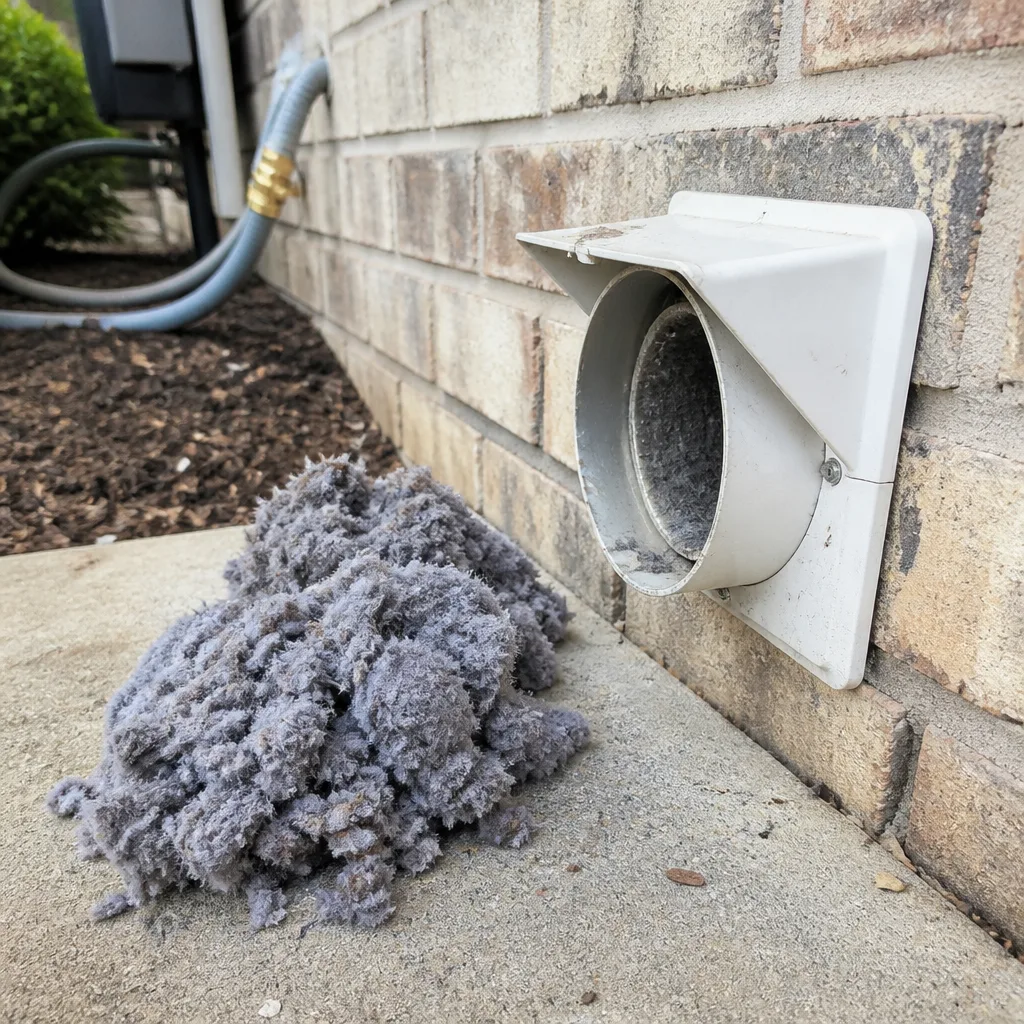
- Exterior vent flap: Look outside. The flap should open freely when the dryer is running. Lint visible around the flap means the line is loading.
- Surface heat: Briefly feel the outside of the dryer and the flexible connector behind it. Unusually warm surfaces after a cycle warrant attention.
- Lint visible around the vent cap: Note it. Photograph it. This is what a professional dryer vent cleaning visit is for.
Professional dryer vent cleaning is scheduled work, not emergency work, which means the right time to book it is when you notice the early signals, not when the dryer stops performing altogether. If you can’t remember the last time the line was cleaned, that’s your starting point for the log.
Why Duct Repair and Sealing Belongs on the List
Cleaning is half the equation. The other half is sealing, and most checklists leave it off because most duct services don’t offer it. In our experience, the homes with persistent uneven heating and high bills don’t just have dirty ducts; they have ducts that leak. Cleaning a leaking system gives you a clean leaking system, and the air loss resumes the moment the crew leaves.
What to look for as a homeowner:
- Rooms that never reach the set temperature, especially rooms farthest from the air handler.
- Temperature swings between rooms of more than a few degrees, measured with a simple thermometer.
- Whistling or rushing sounds at grilles, or at seams in the air handler cabinet.
- Visible separation at duct joints, especially on metal ductwork with taped seams that have dried and lifted.
- Dust patterns near the air handler cabinet, which often trace a leak path.
When those signals show up, a proper Air Duct Cleaning Oak Cliff visit should include a look at the joints, not just the interior of the runs. Sealing those joints is what protects the cleaning investment and brings the system back into balance. Ask whether the crew inspects and can repair leaking sections, or whether they only clean what’s already there. If they can’t repair, the fix will keep needing redoing.
Whole-home air quality accessories, like Aprilaire humidification or Honeywell filtration, also depend on a sealed system. A humidifier on a leaky duct never keeps up; a high-MERV filter cabinet on a leaking return pulls unfiltered air into the cabinet. The repair step is the one that makes every other step work as intended.
How Often Does It Really Need Doing?
Most Oak Cliff homes benefit from a professional duct cleaning every three to five years, with dryer vent cleaning and HVAC cleaning included in the same cycle. That’s an honest range for a typical house, not a rule that applies identically to every situation. Your log tells you when your own interval should tighten or stretch.
What compresses the interval:
- Recent renovation or drywall work anywhere in the home.
- Pets in the house, especially dogs that shed indoors.
- A pollen-sensitive or asthma-prone household member.
- Older ductwork with worn joints that shed particles.
- A home with high dust load from nearby construction activity.
What stretches the interval:
- A newer system with well-sealed ducts and consistent maintenance records.
- A household with no pets and good filter habits.
- Cooling and heating systems that aren’t running at extreme loads.
If you’ve never had the ducts cleaned and don’t know the system’s history, the first visit establishes your baseline. Change the filters every 60 days through spring and summer for the first year, log everything, and the second visit becomes your calibration point. The important thing is that the decision to clean is driven by your own log rather than a national average or a marketing calendar.
For a broader picture of the full service set and what a visit covers, this Oak Cliff air duct cleaning overview is the right starting point.
Common Mistakes to Avoid
- Trusting the filter box’s interval in Oak Cliff. The 90-day default is a national average. Pollen and summer dust load here usually justify 60 days through the heavy seasons, and skipping this is the most common reason ducts start loading prematurely.
- Skipping the monthly walkthrough because “nothing’s wrong.” The point of the walkthrough is to catch drift, and drift is invisible until it’s a real problem. A grille that looks fine in June may have looked different in March, and you’ll only know if you wrote it down.
- Hiring on price alone and never asking about equipment. If the crew shows up with a shop vacuum, the job is not a full-system clean. Ask about rotary contact cleaning, HEPA containment, and negative pressure before the visit, not after.
- Never photographing the ducts. Without before-and-after photos of your own home, you can’t verify what was done. Stock photos don’t count.
- Skipping dryer vent cleaning because the dryer still works. A working dryer can still hide a lint-loaded vent. The signals are drying time drift and a linty exterior flap, not whether the drum spins.
- Ignoring leaking joints after a cleaning. Cleaning a leaking system and stopping there is like wiping a floor without fixing the faucet. Ask about duct repair and sealing as part of the same visit.
- Treating the checklist as a one-time document. The log is only useful if you keep adding to it. A dated record beats a perfect first inspection every time.
See the difference
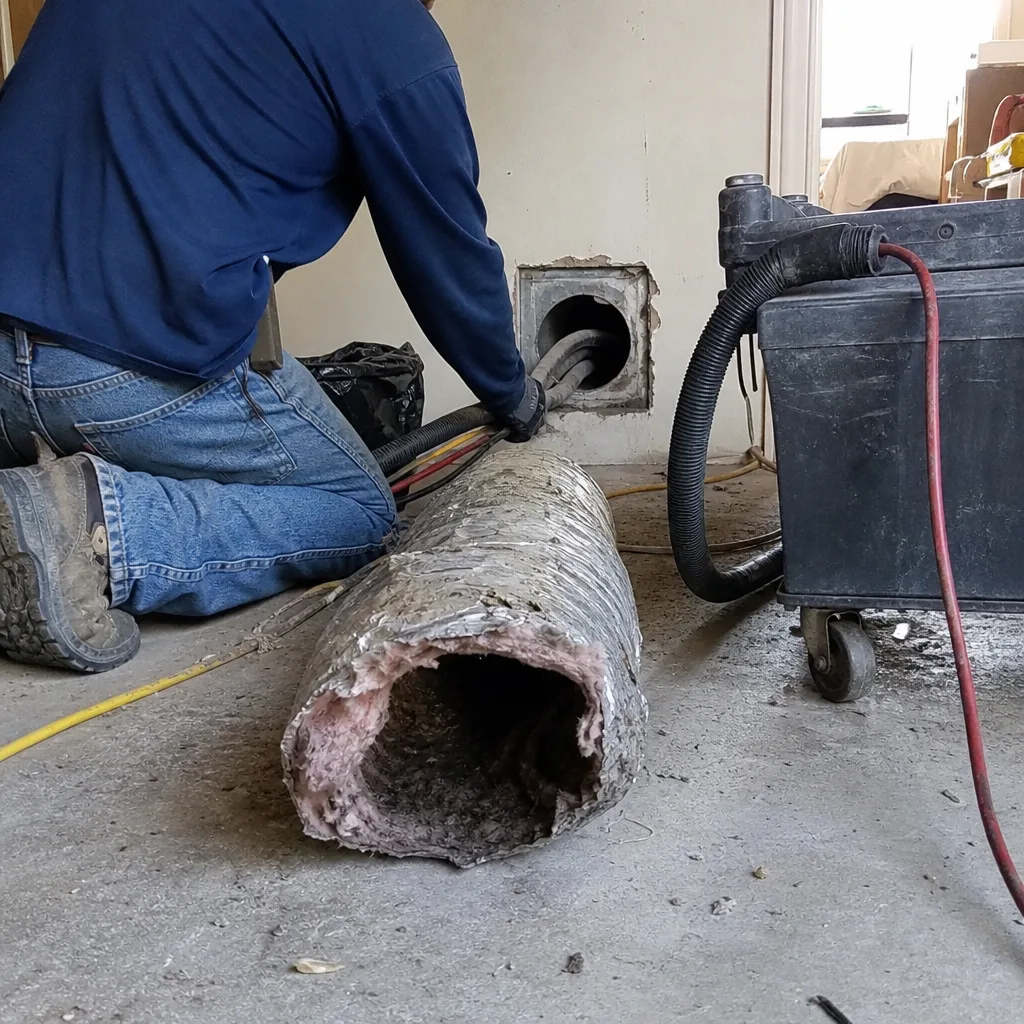 Before
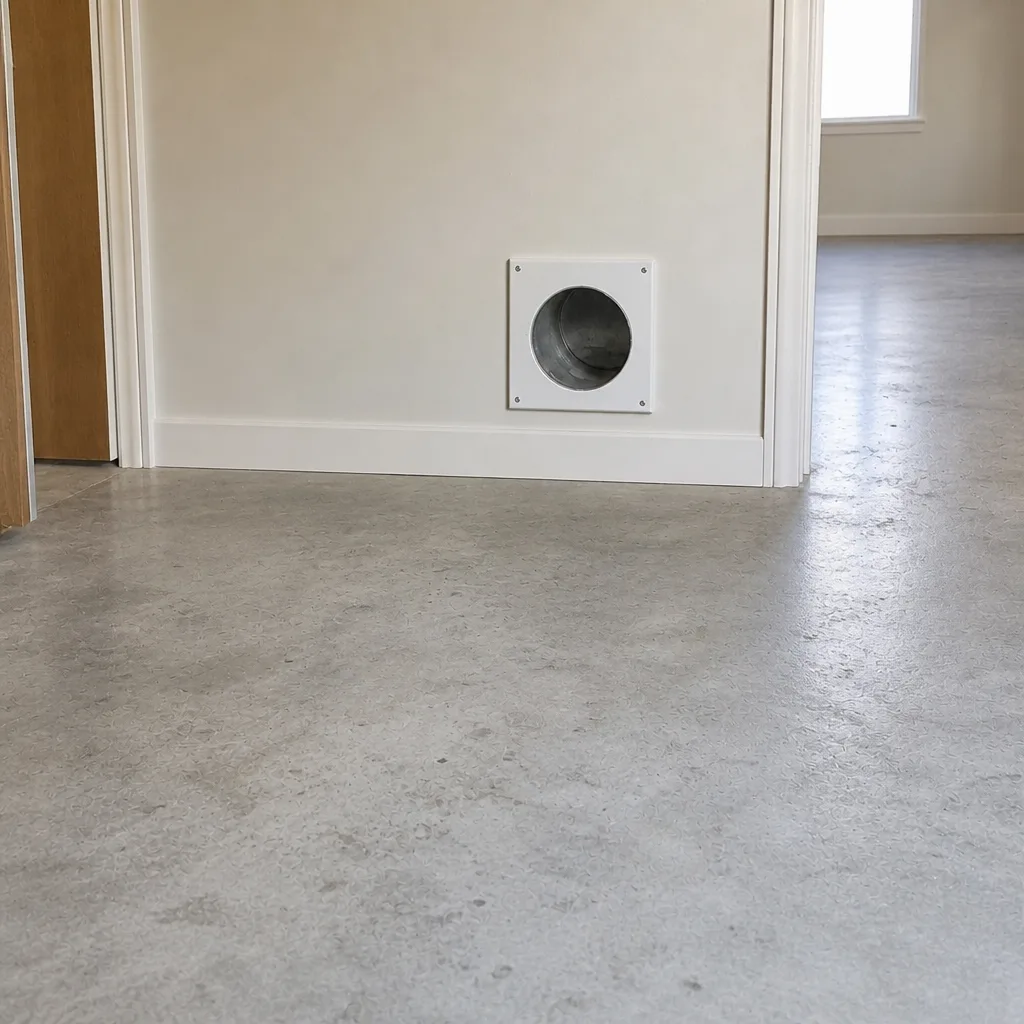 After
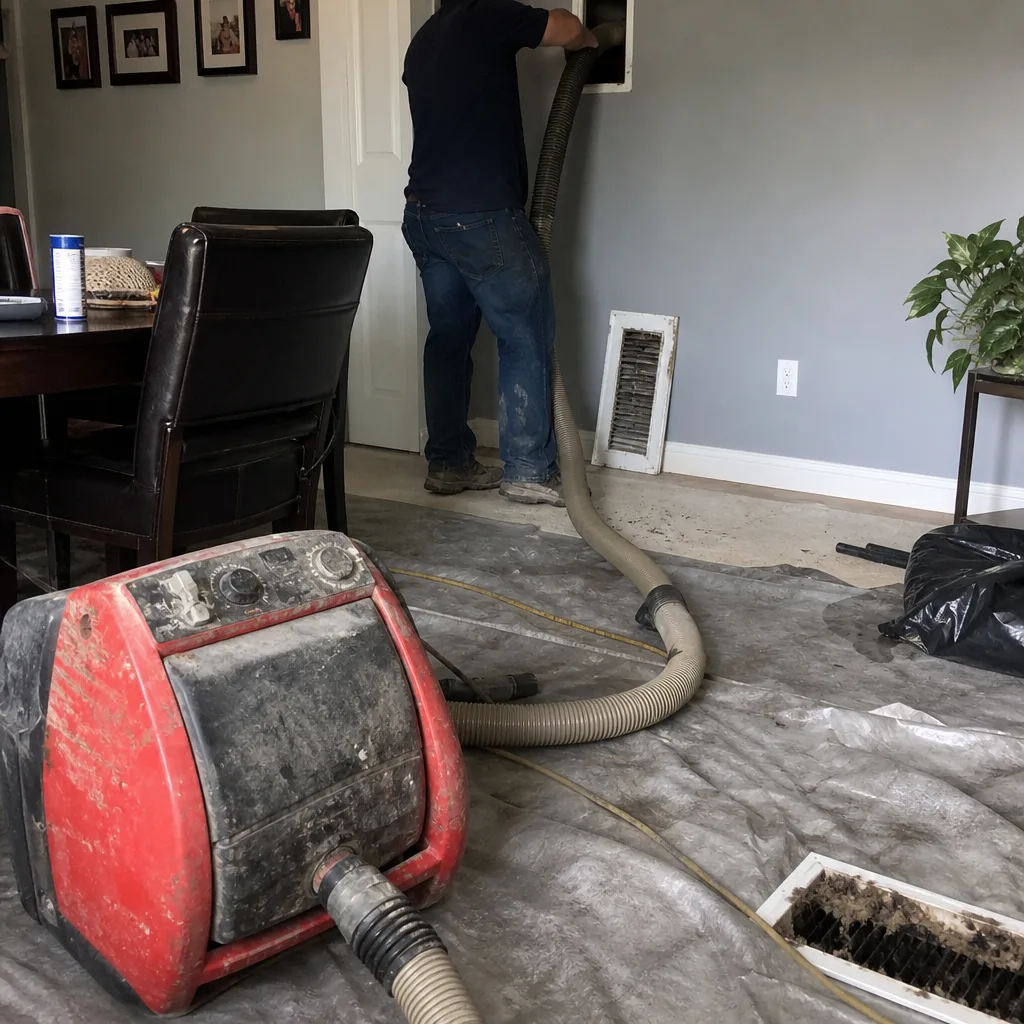 Before
 After
 Before
 After
When to Call a Professional
Call a professional when grilles show visible debris that your monthly walkthrough can’t explain away, when odors return within weeks of a filter change, when rooms in your Oak Cliff home heat or cool unevenly with no other cause, or when your filter loading rate doubles. Call when a renovation has pushed drywall dust through the system, when the dryer vent signals a full line, or when the ducts have never been inspected and you can’t say what’s inside them. Skip the DIY shop-vac approach; it moves debris without containing it, and it misses the surfaces a rotary contact cleaner actually scrubs. Air Duct Cleaning Oak Cliff offers free estimates in Oak Cliff, and the written estimate sets the flat price per system before any work begins. Call (855) 337-2058. We answer 24/7. Fast dispatch from 7am to 7pm, Sunday through Friday.
Frequently Asked Questions
Air duct cleaning in Oak Cliff is priced per system, by estimate, not per vent, and the written estimate sets the final price before work begins. A full-system clean that includes HVAC cleaning and dryer vent cleaning in the same visit is priced as a package, not as three separate line items. Call (855) 337-2058 for an exact quote. Estimates are free.
Cheaper quotes usually cover less work: surface vacuuming rather than rotary contact cleaning, no containment, no cabinet or coil inspection, no dryer vent. The equipment matters. A truck-mounted vacuum alone doesn’t scrub duct walls; the Rotobrush rotary system does. Ask what equipment is included before you compare prices, and ask whether containment is part of the job. Call (855) 337-2058 and we’ll walk through the scope on your specific system.
You should have before-and-after photos of your own ducts, the access panels sealed on-site, and a recorded static pressure reading from before and after the visit. You should also be able to see inside the air handler cabinet. If any of those are missing, ask. Call (855) 337-2058 with questions about a completed visit.
Most homes here do well with a full cleaning every three to five years, tightened to two to three if you have pets, allergies, older ductwork, or have completed a renovation. Dryer vent cleaning fits into the same schedule. The intervals should track your own log, not a national average. Call (855) 337-2058 to schedule an inspection and set your baseline.
Check that every access panel is properly sealed, look at the before-and-after photos, confirm the static pressure was recorded, and run the tissue test at each supply grille to feel the difference. Then file the paperwork where you’ll find it before the next service call. Call (855) 337-2058 if anything looks off after a visit.
Sanitizing is a separate step from cleaning and worth it when there’s an odor source, recent water intrusion, or a household member with sensitivities. It’s not always necessary, and a good crew will tell you when it is and when it isn’t. Call (855) 337-2058 to talk through whether it fits your situation.
The Bottom Line
The checklist works because it turns your duct system into a tracked asset instead of a mystery. A monthly walkthrough catches change early. Filter intervals calibrated to Oak Cliff’s pollen and dust load save the system from premature loading. Pre-service questions confirm the crew and equipment match your home. Post-service verification captures static pressure, panel condition, and photos you can point to later. Between cleanings, utility bills, airflow feel, and filter load pattern tell you when something shifted. The dryer vent line belongs on the same list, and duct repair and sealing belong next to cleaning so the fix holds. Keep the log, and every future call starts with data.
We connect Oak Cliff homeowners with independent local professionals who use professional-grade equipment: Rotobrush rotary contact-cleaning systems, Nikro HEPA-rated vacuums, and Abatement Technologies negative-air containment. Our technicians have up to 9 years of experience. The local pro is licensed and insured as their state requires. The price is set per job by the written estimate. Contact us at (855) 337-2058 for a free estimate. We answer 24/7. Fast dispatch from 7am to 7pm, Sunday through Friday.
Written by the team at Air Duct Cleaning Oak Cliff.